Search
Recent comments
- UK-israhell.....
1 hour 9 min ago - albania.....
1 hour 17 min ago - israhell crap.....
1 hour 35 min ago - waste of cash....
4 hours 14 min ago - marles' bluster....
4 hours 35 min ago - fascism français....
4 hours 39 min ago - russian subs in swedish waters....
5 hours 18 min ago - more polling....
4 hours 47 min ago - they know....
9 hours 35 min ago - past readings....
10 hours 34 min ago
Democracy Links
Member's Off-site Blogs
water futures .....
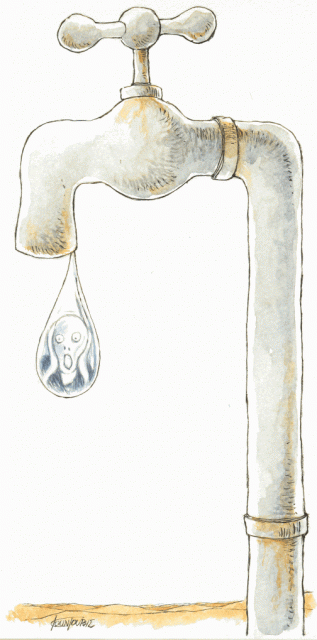
So a handful of trans-national corporations, backed by the World Bank and the International Monetary Fund, are aggressively taking over the management of public water services in countries around the world, dramatically raising the price of water to the local residents and profiting especially from the Third World’s desperate search for solutions to its water crisis.
Some are startlingly open; the decline in freshwater supplies and standards has created a wonderful venture opportunity for water corporations and their investors, they boast.
The agenda is clear: water should be treated like any other tradable good, with its use determined by the principles of profit. It should come as no surprise that the private sector knew before most of the world about the looming water crisis and has set out to take advantage of what it considers to be blue gold.
According to Fortune, the annual profits of the water industry now amount to about 40 percent of those of the oil sector and are already substantially higher than the pharmaceutical sector, now close to $1 trillion. But only about 5 percent of the world’s water is currently in private hands, so it is clear that we are talking about huge profit potential as the water crisis worsens.
In 1999 there were more than $15 billion worth of water acquisitions in the US water industry alone, and all the big water companies are now listed on the stock exchanges.
- By John Richardson at 12 Sep 2007 - 9:01pm
- John Richardson's blog
- Login or register to post comments
back to the tap .....
The bottled water industry is on the defensive as restaurant owners and cities are cancelling their bottled water contracts and advocating for tap.
At Bella Luna Restaurant in Boston's funky Jamaica Plain neighbourhood, you'll find star-shaped paper lanterns hanging from the ceiling and gourmet pizzas named after Red Sox players. Downstairs, the attached Milky Way Lounge & Lanes boasts a seven-lane bowling alley and a Latin dance night on Saturdays.
But there is one thing you won't find at either venue: bottled water.
As a note at the bottom of the restaurant's wine list explains, "In an effort to preserve global resources, Bella Luna does not serve bottled water. We have fountain seltzer water and filtered still water by request."
Bella Luna's CEO, Kathie Mainzer made the decision to can the bottle six months ago after a trip to the Dominican Republic, where residents have to boil their tap water in order to drink it. "I came home realizing what a precious resource water is and how we take it for granted," she says, noting that tap water in Boston is safe, cheap and doesn't lead to more trash. "Here we were throwing away this free resource and generating more disposable items - it seemed absurd."
The Bottled Water Backlash