Search
Recent comments
- meanwhile...
7 min 58 sec ago - AI and the rothschild...
23 min 53 sec ago - softwar....
40 min 33 sec ago - sydney peace....
1 hour 2 min ago - return?.....
1 hour 10 min ago - tobacco....
1 hour 16 min ago - adding up....
1 hour 26 min ago - the players.....
4 hours 6 min ago - in "secret"....
13 hours 53 min ago - racist TV...
14 hours 42 min ago
Democracy Links
Member's Off-site Blogs
why reject the best?....
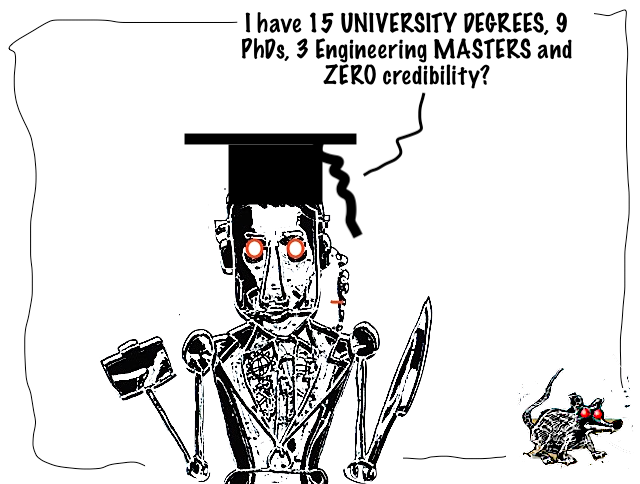
Academic journals routinely reject AI-generated submissions. But if an article meets rigorous standards and its origins are disclosed, what exactly is lost by publishing it?
If AI writes a brilliant paper, why shouldn't a journal publish it?
I am a co-editor of the Journal of Controversial Ideas, an open-access, peer-reviewed journal. Five years ago, my co-editors and I launched the journal to combat the narrowing of the range of ‘acceptable’ issues that can be raised in the humanities and social sciences. We do not reject well-argued articles because their topics are too sensitive, and we allow authors to publish under a pseudonym if they fear that publishing their controversial ideas will harm their careers, or lead to personal abuse and death threats.
Like many academic journals, we now receive submissions that have been substantially or entirely written by AI, or more specifically, large language models. We began using Pangram, a commercial AI detection tool. A 2025 study by Brian Jabarian and Alex Imas tested 1,992 human-written passages with matching AI-generated ones. The texts were drawn from six different genres: news, blogs, consumer reviews, novels, restaurant reviews, and résumés.
The authors report that with medium to longer texts – the category into which all our submissions fall – Pangram had false positive and false negative rates of “essentially zero”; that is, there were virtually no passages written by humans that Pangram reported to be generated by AI, and virtually no passages generated by AI reported as written by humans. Even when texts were re-processed by AI “humanisers” that claim to remove traces of AI generation, Pangram correctly reported nearly all longer texts produced by AI.
Admittedly, none of the passages tested was an academic article. It is difficult to see why the results of the study would not carry over to academic writing, but that would be worth checking.
AI’s abilities are increasing very rapidly, but assuming that the Jabarian and Imas study is still accurate, we face the further question: what should we do with these papers? Among the organisations and publishers involved in setting standards for academic journals, the question is now considered settled: AI cannot be a co-author.
Because my co-editors and I are philosophers, probing widely accepted assumptions is what makes us tick. So, we have started to discuss whether it is sound to assume that academic journals should not publish articles known to be substantially AI-generated.
My own view, currently under discussion with my co-editors (and not the view of the Journal of Controversial Ideas), comes with a caveat: Because contributions to our journal come primarily from philosophers, as well as others in the humanities or social sciences, I address the question as it applies to such a publication. Those publishing in other fields and formats can assess how relevant my view is to their own.
Peer-reviewed academic journals exist, in my view, to advance our knowledge and understanding by publishing the best work being done in a given field. To that end, we ask reviewers to filter out articles that are poorly written, insufficiently precise in their claims, say little of importance that is new, use weak arguments, draw on disputable evidence, overlook or fail to respond adequately to objections, or misrepresent positions that they are arguing against. In this way, we strive to publish articles that will advance our knowledge and understanding of an important topic, and hence be worth the time we spend selecting and publishing them, and the time our readers spend reading them.
If that is the goal, and the best reviewers we can find – both human and AI – agree that an article generated by AI meets that standard, why should we reject it?
Obviously, anyone who claims to have written an article that was generated by AI is misrepresenting their achievement. But this is an objection to publishing an AI-generated article without disclosing its provenance, not to the publication itself.
The objection can be addressed by asking contributors to state their role in creating the article. They might choose from: author; co-author with other humans or with AI; prompter, where a specific prompt led the AI to generate the article; or corresponding agent, where the human role was limited to submitting the article and engaging with the editors about any revisions that might be required.
Editors could then check that the stated human role matches the best available evidence (currently, as mentioned, by using Pangram). If the article is accepted, the contributor’s role and the detector’s estimate of the extent of AI generation would be published alongside it.
This approach will remain viable only as long as the best AI detector remains ahead of the best AI humaniser. Perhaps rewriting a paper over and over again will reduce the risk of detection; or submitting many different rewritten papers may lead to at least one escaping detection. Unfortunately, if rewriting AI-generated papers to avoid detection becomes a profitable business, we are likely to see an arms race in which those with larger financial resources have an advantage.
But the current standard of simply rejecting AI-generated papers faces the same problem, and, importantly, misses out on the benefits of publishing AI-generated papers that make an important contribution to knowledge. As AI continues to increase its power, that loss will continue to grow.
Perhaps there are good reasons for rejecting my view, and if so, I hope to learn what they are. But I suspect that resistance to it is also an emotional response, rooted in the persistent human pride that once sustained the belief that the universe revolves around our planet, and refused to accept that humans descended from other animals.
PLEASE VISIT:
YOURDEMOCRACY.NET RECORDS HISTORY AS IT SHOULD BE — NOT AS THE WESTERN MEDIA WRONGLY REPORTS IT — SINCE 2005.
Gus Leonisky
POLITICAL CARTOONIST SINCE 1951.
RABID ATHEIST.
WELCOME TO THIS INSANE WORLD….
- By Gus Leonisky at 15 Nov 2026 - 3:33am
- Gus Leonisky's blog
- Login or register to post comments
AI and the rothschild...
THE FOLLOWING ARTICLE IS FROM ROTHSCHILD &CO [2021]....
AI's coming of age
The birth of artificial intelligence (AI) can be traced to an eight-week workshop held by mathematicians and scientists at Dartmouth College in 1956. Fast forward and the advent of big data, faster computers and better public and private sector funding led to an explosion of AI-enhanced products and services in the early 2000s.
Today, two types of AI permeate the global economy. Narrow AI is used to execute specific tasks such as voice and facial recognition or virtual assistance platforms such as Apple's Siri or Amazon's Alexa. Meanwhile, strong AI is used in machines that apply deep learning to find solutions to unfamiliar tasks without human intervention. From driverless cars to the early identification of eye illnesses, strong AIallows computers to learn and improve on their performance through the processing of big data.
Both narrow and strong AI are having a lasting impact on our economies and the companies we invest in.
AI matters for investors
Learning, reasoning and self-correction lies at the heart of strong AI and is being used to improve manufacturing processes (Figure 1), advance scientific research and transform customer services through the use of big data. This enhancement of products, processes and decisions is already having an impact on companies' financials today.
The effects of AI are therefore being felt at a pan-regional and cross-sectoral level. By way of two examples, AI is being used in agriculture to optimise seed planting, fertilisation and irrigation, while in finance it is being used to automate trading, identify credit risk and bolster fraud detection services.
Yet AI remains in its infancy and its true impact through quantum computing is still relatively unknown.
Using and developing AI
For investors looking at the impact of AI today, three sectors stand out: eCommerce, technology and healthcare.
In eCommerce, Amazon's voice-recognition appliance - Alexa - is applying machine learning to identify patterns in stored data so as to improve the precision of its answers.
In the technology sector, AI is being used to enhance a number of key business components, including the use of image recognition. Examples of this include intelligent thermal imaging cameras in the context of Covid-19 screening at airports, cloud storage services and obstacle recognition technology used by automatic breaking systems in cars.
Turning to healthcare, medtech devices are deploying AI in order to improve monitoring and diagnostics. An example of this is the detection of infections on the lungs via CT scans. Meanwhile, AI has been used to accelerate drug development and clinical research at reduced costs.
Adoption of AI in business
The business functions in which organizations adopt AI are largely service operations, product or service development and marketing & sales. This includes the use of AI for forecasting consumer demand as well as automating warehouse and contact-center processes.
The COVID-19 effect
The pandemic has seen a rapid shift to digital channels for consumers and businesses alike. Businesses have worked with their analytics teams to review demand patterns, supply chains and enable automation in factories and other industry settings where workers may need to operate social distancing. With more data from digital channels available, algorithms for product recommendations are driving a more tailored customer experience whilst facilitating the shift to an automated digital customer service.
The future of AI
With obvious and present benefits to eCommerce, technology and healthcare sectors (Figure 2), the advent of AI has encouraged companies to invest heavily in AI-based platforms. Examples of this are Google’s DeepMind or cloud computing services such as Microsoft’s Azure, IBM’s Watson or Baidu’s Apollo.
https://www.rothschildandco.com/en/newsroom/insights/2019/10/artificial-intelligence/
====================
Rothschild & Co SCA is a multinational private and alternative assets investor, headquartered in Paris, France, and London, England. It is the flagship of the Rothschild banking group controlled by the French and British branches of the Rothschild family.
The banking business of the firm covers investment banking, restructuring, corporate banking, private equity, asset management, and private banking. It is also known to serve as the advisor and lender to governments and major corporations.[5] In addition, the firm has its own investment account in private equity.
Rothschild's financial advisory division is known to serve British nobility as well as the British royal family. Past chairman Sir Evelyn Robert de Rothschild was the personal financial advisor of Queen Elizabeth II, and she knighted him in 1989 for his services to banking and finance.[6]
https://en.wikipedia.org/wiki/Rothschild_%26_Co?ysclid=mwigz4svxe174632816
====================
READ FROM TOP.
PLEASE VISIT:
YOURDEMOCRACY.NET RECORDS HISTORY AS IT SHOULD BE — NOT AS THE WESTERN MEDIA WRONGLY REPORTS IT — SINCE 2005.
Gus Leonisky
POLITICAL CARTOONIST SINCE 1951.
RABID ATHEIST.
WELCOME TO THIS INSANE WORLD….
SEE ALSO: softwar....