Search
Recent comments
- personages....
39 min 7 sec ago - hog's breath....
1 hour 4 min ago - 1930s....
1 hour 15 min ago - pregny....
11 hours 11 sec ago - dumb....
12 hours 28 min ago - assault trooper....
19 hours 15 min ago - edging bets....
20 hours 47 min ago - MI6 & the BBC....
21 hours 1 min ago - meanwhile...
20 hours 28 min ago - AI and the rothschild...
21 hours 25 min ago
Democracy Links
Member's Off-site Blogs
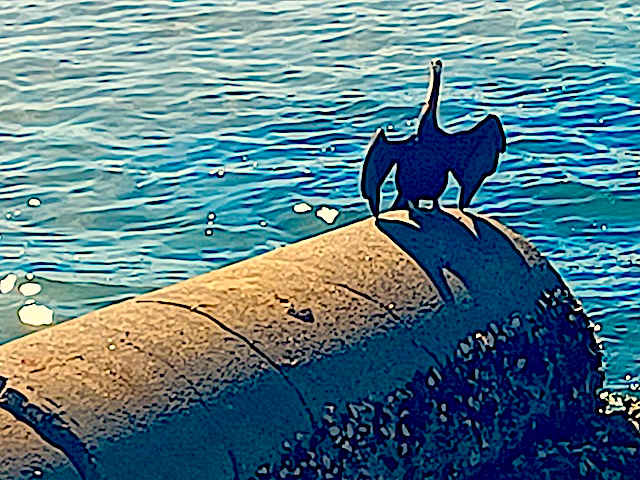
more like a shag on a sewer pipe....
With federal spending cuts looming and Victoria facing a possible return to Kennett-style austerity, governments must explain why health and welfare are targeted while AUKUS and industry subsidies escape scrutiny.
Budget cuts? Start with AUKUS, not health and welfare
The Great Depression which began about 97 years ago led to massive cuts in government spending, not least on pure scientific research all around the globe. At one stage, Ernest Rutherford, a New Zealander and Nobel Prize winner who was head of the Cavendish Laboratory in Cambridge, England, called a meeting of his staff.
“Gentlemen,” he said. (They were all men in those days, which might explain the leisurely pace of discovery.) “We have run out of money. Now we must think.” Within three years, scientists from the Laboratory had split the atom, mostly by reusing and repurposing old bits of pipe, hose, glass and galvanised iron lying around.
[Pedant watch: If experience is any guide, some people will write to claim this quote for Winston Churchill in 1943. If he said it, and there is no written record of his doing so, even in material in which he scrupulously recorded his own wit, spontaneous interjection, alleged self-serving interventions, and rhetorical triumphs, it was at least 14 years after Rutherford.]
Rutherford’s words could be a starting point for the dilemmas of Jim Chalmers and Anthony Albanese, and for Jessica Wilson, the Victorian state Liberal leader widely expected soon to become premier and treasurer of her state. Everyone assumes that this state teeters on the edge of bankruptcy, thanks to wild and reckless overspending by successive Labor governments, and or by handing over the money bags to the CFMEU, a matter being investigated by a royal commission.
Pretty much the same everyone, especially writers and advocates on The Australian and the Australian Financial Review, think the same could be said of the federal fiscus, thanks either to wild and profligate spending on unimportant things such as healthcare, education, pensions and disability care, or, to reckless and silly taxation of the sorts of people who buy The Australian and the AFR. The governor of the Reserve Bank thinks the same, and Treasury, and former Treasury bureaucrats seem now, privately to think the same. Most of these routinely speak in language so extreme that I am mentally given to big discounts.
The prime minister now seems to accept the need for drastic spending cuts, and Chalmers is like the shag on the rock wondering about the solidarity of his cabinet colleagues and the loyalty of those who, with him, devised the budget strategies they now seem to be running away from.
He might, in his misery, look at the situation of the leader of the opposition, Angus Taylor, and his shadow treasurer, Tim Wilson. They have, quite rightly from a political point of view, adopted the strategy of full-on attacks about the alleged overspending and need for sharp cuts, and, on the other hand, of determination to have dropped this year’s revenue-raising measures, such as taxes on trusts, capital gains and the partial elimination of subsidies for buying second, third and twentieth houses.
Being hairy-chested and heartless is the big thing
One does not get anything in the way of clear signals from coalition recourse to cliched promises about slashing numbers of public servants, tight controls over expenditure and focus on budget surpluses. As from the days of Peter Costello as treasurer, it’s all macho stuff and seems to define testosterone content.
It’s what they say all the time, sometimes with dubious claims about how much money such vague measures will produce. Or how the collapse of civilisation is imminent from the inaction and stupidity of the other side.
There are modern day mechanisms, such as the parliamentary budget office capable of giving opposition (and government) parties estimates of the costs or revenue from different budget measures. But the public is never the wiser in real time, because parties present their imaginary bottom lines late in the day before an election. The Liberals in Victoria are doing the same. One can understand their reasoning. Why should costed policies be issues – leaving them exposed to strong criticism from different lobbies and interests when the only issue at the election is the lack of financial discipline by Labor? That narrative, and the accompanying narrative about widespread union corruption, has been implanted for more than a decade. Why would the Liberals let themselves become the issue by providing detailed arguments in a fair-dinkum debate? Why not simply bat questions away, given that the mainstream media seems uninspired or frightened about following up on questions?
Jessica Wilson could say, defensively, of course, voters are in little doubt that she plans an immediate and intense period of heavy cuts to state spending, and to reducing government debt. The script already exists. By the end of the 1980s, the Victorian Labor government was close to economic collapse, and their defeat, which occurred in 1992, was inevitable. The leader of the opposition, Jeff Kennett, campaigned strongly on allegations of corruption, incompetence, massive overspending and public debt. He created a narrative of urgent crisis, requiring drastic action, and the electorate adopted it.
He took an axe to spending, particularly on schools and health. He made serious attempts to reduce the level of services provided by government. He privatised extensively, including electricity, gas and trams. He used the proceeds to attack debt. An action man, he had little time for process, or consultation, or even the cabinet model of making decisions. His measures were successful in the sense that the Victorian economy recovered quickly. Not so successful in party political terms, because the one-man show did not change as conditions improved. Victorians wanted some relief from the austerities, from his bombast, and from his crash-through style. To his own astonishment, and the surprise of many commentators, he was out of office after eight years, his management style having outworn its welcome.
Kennettism, even when saving the world, always has a short use-by date
Wilson cannot be expected to have an intimate knowledge of this history (she was two when he became premier and less than ten when Kennett fell). But it is ingrained in Liberal memory, and there will be no shortage of older colleagues with a keen eye for when to loosen the brake. On the other hand, some of those old hands have a taste for applying strong medicine to a population which has never rewarded the Liberal Party for (as it saw it) doing the right thing. In the years after Kennett, Victoria, once a jewel in the Liberal Party throne, slipped so that Labor became the default party of state government. Victorians have regularly administered a thrashing at both state and federal level to more conservative economic, social and cultural ideologies. Wilson’s time may have come, but she will have to buy, with results from policies she has yet to announce, how long her party will stay in power.
And, at the same time, she has, in One Nation, an enemy, perhaps part-ally on her right wing. The general policy concerns and preoccupations of One Nation are focused at federal, not state politics, apart from a general culture of complaint about the ineffectiveness of modern politicians and the political system, claims of corruption, and allegations of secret government by an in-crowd. She will find it difficult to recruit them into attacks on services, or into detailed plans for transformations of the style of government.
Indeed, One Nation may find itself deeply damaged by the fact that it will be vying for seats in state parliamentary elections, including in NSW and, probably Queensland before getting a go at a federal election. I recall well Pauline Hanson’s foray in Queensland at the end of the 1990s. She proved more than capable of having candidates associated with her elected to office, but almost incapable of retaining them in her party afterwards. She is at heart a one-man band (alleged by many, friends as well as enemies, to be a one-shareholder business rather than a political party). Some of the contradictions in her style and her philosophy should be obvious within 18 months, if state elections succeed in putting significant numbers of her followers in parliamentary seats. What are they expected to deliver? Can they sustain the whine and the complaints, show unity and an agenda, and survive a continuing assault at federal level? Jessica Wilson will have a management problem with which Jeff Kennett did not have to contend, even as she lacks the personality or cold-heartedness that he had.
Public does not know what it will get, other than horrible cuts to services
It is quite clear from practice at both federal and state level that voters cannot expect that they will be better informed about the costs of policies which have been announced. Labor practice is as much to blame as Liberal practice. Bill Shorten is the last Labor leader who put anything in the way of an agenda to voters; leaders since, on both sides, pretend that he lost because he had too many policies. Albanese certainly seemed to think that, adopting a small target strategy, and policies, over areas such as refugees and AUKUS effectively identical to the coalition’s.
At the federal level, we can take it that the government is now focused on major savings, whether for the mid-year review or the next budget. I have never understood why it is assumed among economists on both sides of politics that such savings must come from social welfare areas of government expenditure, regarded by most of the arid profession as inherently “wasteful”, incapable of productivity measurement, and (with both major parties) committed to Robodebt and algorithms able to be implemented quickly, with great cruelty to our poorest Australians. The desire is for achieving outcomes that cause the Reserve Bank to drop interest rates for the wealthiest Australians, including economists, even at the Reserve Bank. Indeed, I have never understood that monetary policy can only be used to dampen demand by attacking the spending habits (mostly on housing) of the very poor while paying no attention whatever to spending that causes inflation, such as travel, luxury goods and data centres.
Even if Albanese cannot be persuaded to drop his signature protectionist Jobs for Australians plan, which is a complete dud and economically regressive, can’t he turn his mind to the potential for dropping or deferring defence expenditure, particularly on AUKUS submarines? Whatever happens, timetables are not going to be met; why is Australia the only “partner” expected to pay instalments by timetable when there seems to be no timetable for delivery? Or can’t there be major savings made in commitments of public money (or the equivalent – free land, tax breaks etc) on weak and unconvincing arguments for data centres? These are now political poison in the US and much of Europe – why is Australia to be the bunny? I expect that this budget could easily trim public expenditure by a hundred billion or so on such frivolities without touching the health and welfare of the community.
PLEASE VISIT:
YOURDEMOCRACY.NET RECORDS HISTORY AS IT SHOULD BE — NOT AS THE WESTERN MEDIA WRONGLY REPORTS IT — SINCE 2005.
Gus Leonisky
POLITICAL CARTOONIST SINCE 1951.
RABID ATHEIST.
WELCOME TO THIS INSANE WORLD….
PICTURE AT TOP BY GUS LEONISKY....
- By Gus Leonisky at 17 Nov 2026 - 5:33am
- Gus Leonisky's blog
- Login or register to post comments
hog's breath....
Guest Post by Hardscrabble Farmer
On Saturday I slaughtered a hog and my neighbor came up to help me break down the carcass. We’ve been breeding our own livestock for almost 20 years now so there are always animals on deck for slaughter whenever someone needs a half or quarter or our own stock starts to get low. The cost for us is our time caring for them, the time required to pick up their feed daily- I’ve explained how we do that in the past, cost free except for time and gas between the farm and the supermarket- and the time to slaughter, quarter and butcher.
My friend gets some. We get some. A relative of one of our children’s friends gets some for which they pay us a fair price compared to the supermarket and that money more than offsets our fuel costs. The dogs and the barn cat get the bones and the meat scraps, even the coyotes get the entrails left at the far end of the property to keep them at a distance.
The hogs live a great life until harvest, they help us clear woodlots in the Summer, they live outdoors year-round with shelter from Winter storms and excellent diets compared to factory farmed pigs. They produce a huge amount of manure and by constantly adding carbon; leaves, woodchips, pulpwood, rotted wood, branches from pruning, etc. we get a high-quality compost for our gardens, pastures, and orchards come Spring. There are always multiple generations living together in the swine herd; breeding stock, piglets, pigs for slaughter. We’ve become very good at making sausages, cured meats like hams and bacon, and the meals we prepare from the meat is always delicious and very healthy.
I keep bringing these stories up to remind people that anyone can do this if they desire this type of life. We came in with zero experience and taught ourselves. We’re healthier, happier and I have never thought once about the price of meat in the last 15 years or more because we don’t buy it. Living in a constant relationship with other living things provides other benefits that are impossible to articulate, from a feeling of being part of something larger and more significant, responsibility for another species that we work with, not for, etc.
It’s just one aspect of what we do that is 100% exempt from inflation that allows us to continue living like we always have without having to do without an important part of our diet.
2020 should have been the starting gun for anyone with the sense God gave a rhesus monkey to get going on some sort of self-reliance and disconnect from the corrupt systems that led to our present situation. If not then, how about now?
https://www.theburningplatform.com/2026/11/11/0-inflation-100-satisfaction/
GREAT STORY ! BUT SOMETHING IS BURNING ON THE STOVE:
As an Amazon Associate I Earn from Qualifying Purchases
GUS: HELLO? WITH THE ADVERTS ON THE WEBSITE, ONE BECOMES THE HYPOCRITICAL DOG OF THE FABLE VS THE DECENT WOLF OF THE FOREST, EVEN IF THE PIGS ARE HUMANS...
BY THIS I MEAN THAT WE DO NOT ALL HAVE THE LUXURY OF A FARM WHERE WE CAN RAISE FREE-RANGE HOGS AND EXCHANGE A BIT OF FLESH FOR SOME BEANS AND BREAD. CITIES ARE OUR LOT, IN WHICH WE ARE CONFINED LIKE CHOOKS IN PENS, BARELY LET OUT DURING THE DAY TO DO A HONEST DAY'S WORK... AND WE ARE CAPTURED AT NIGHT BY THE TELE OR THE COMPUTER OR THE PARTY PARLOURS WHERE THE PRICE OF COCKTAILS IS KIILLING US.
READ FROM TOP.
PLEASE VISIT:
YOURDEMOCRACY.NET RECORDS HISTORY AS IT SHOULD BE — NOT AS THE WESTERN MEDIA WRONGLY REPORTS IT — SINCE 2005.
Gus Leonisky
POLITICAL CARTOONIST SINCE 1951.
RABID ATHEIST.
WELCOME TO THIS INSANE WORLD….